You followed the recipe.
You measured your ingredients.
You boiled the wort, added the hops, pitched the yeast and waited patiently.
Everything looked perfect.
Then you tasted the finished beer and thought:
“What happened?”
The frustrating thing about homebrewing is that a beer can be excellent right up until one small mistake changes the result.
The good news is that most brewing problems are avoidable.
Here are 5 common homebrewing mistakes that can ruin an otherwise great beer — and what you can do instead.
1. Fermenting at the Wrong Temperature
This is one of the most common problems, especially for new brewers.
Many beginners think that if the room temperature is comfortable for them, it must also be comfortable for the yeast.
Unfortunately, yeast doesn’t work that way.
During active fermentation, yeast produces heat. This means the temperature inside your fermenter can be several degrees higher than the surrounding room.
Too much heat can produce excessive fruity flavors, harsh alcohol character and other unwanted fermentation by-products.
Too little heat can slow fermentation or cause the yeast to stop working before the beer reaches the expected final gravity.
What should you do? 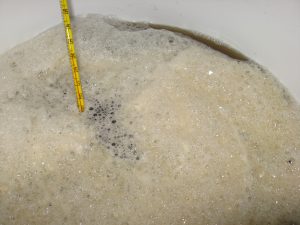
Check the recommended temperature range for your yeast strain and try to keep fermentation within that range.
Even a simple temperature-controlled setup can make a significant difference.
And don’t rely only on the temperature of the room.
Measure the beer, not just the air.
2. Introducing Oxygen After Fermentation
Oxygen is useful when you need it.
Before fermentation, yeast can benefit from oxygen.
After fermentation, however, oxygen becomes one of your beer’s enemies.
Unnecessary exposure to oxygen during transferring, bottling or kegging can gradually damage the beer.
You may notice:
- stale flavors
- reduced hop aroma
- dull or muted flavors
- darker color
- a cardboard-like character
This is particularly important for hop-forward beers where freshness is a major part of the experience.
The simple rule
Once fermentation is underway, avoid unnecessary splashing.
When transferring beer, keep the flow gentle and minimize contact with air.
The less oxygen you introduce after fermentation, the better.
3. Ignoring Your Final Gravity 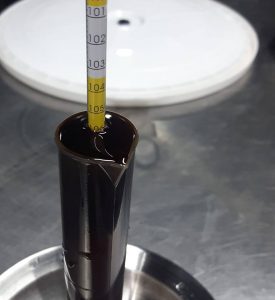
A surprisingly common mistake is judging fermentation by appearance alone.
The airlock stopped bubbling.
The beer looks clear.
It must be finished.
Not necessarily.
Airlock activity is not a reliable measurement of fermentation progress.
The best way to know whether fermentation is complete is to measure the beer’s gravity.
Take a reading and then take another reading later.
If the gravity remains stable, fermentation is much more likely to be finished.
Why does this matter?
Final gravity can tell you a lot about your beer.
It helps you determine:
- whether fermentation is complete
- approximate alcohol content
- how dry or sweet the beer may be
- whether your yeast performed as expected
For example, if your original gravity was 1.050 and your final gravity was 1.010, your approximate ABV would be:
(1.050 − 1.010) × 131.25 = 5.25% ABV
A small hydrometer or refractometer can therefore tell you much more than an airlock ever will.
4. Rushing the Beer
This one is difficult.
You’ve waited through brewing.
You’ve waited through fermentation.
The beer is finally bottled or kegged.
Of course you want to drink it immediately.
But sometimes beer simply needs time.
Freshly fermented beer can contain flavors and aromas that have not yet fully integrated.
Bottle-conditioned beer also needs time to carbonate properly.
Some beers improve significantly after additional conditioning.
That doesn’t mean older is always better.
Fresh hop-forward beers, for example, are often best enjoyed relatively young.
The important thing is to give the beer the amount of time it needs for its particular style and process.
Try this
Instead of drinking the entire batch as soon as possible, save a few bottles.
Taste one after:
1 week → 2 weeks → 4 weeks → 8 weeks
Write down what changes.
You’ll quickly learn how your own beers develop over time.
5. Changing Too Many Things at Once
This is probably the most frustrating mistake for anyone trying to improve their brewing.
You make a beer.
It isn’t quite right.
So next time you change:
- the yeast
- the hops
- the mash temperature
- the fermentation temperature
- the water
- the recipe
- the fermentation time
The new beer tastes better.
Great!
But you have no idea why.
Maybe it was the yeast.
Maybe it was the temperature.
Maybe it was the water.
Maybe it was something else entirely.
Change one variable at a time
If you want to learn how your brewing process works, try changing only one significant variable between batches.
For example:
Batch #1: fermentation at 20°C
Batch #2: fermentation at 18°C
Keep everything else as similar as possible.
Now you have a much better chance of understanding what the temperature actually changed.
This is how you turn homebrewing from guesswork into a learning process.
Bonus Mistake: Not Keeping Brewing Notes
There is one more mistake worth mentioning.
You make a fantastic beer.
Six months later, you want to brew it again.
But you can’t remember:
- which yeast you used
- exactly how much water you used
- the fermentation temperature
- the original gravity
- the final gravity
- how long fermentation lasted
- when you bottled it
The recipe might say what ingredients you used, but it doesn’t tell the whole story.
Keep a simple brew log
You don’t need a complicated system.
Record:
Recipe
Date
Batch size
OG
FG
Yeast
Mash temperature
Fermentation temperature
Fermentation time
Packaging date
Tasting notes
These few notes can become extremely valuable over time.
The Biggest Lesson
Most brewing disasters don’t come from one huge mistake.
They usually come from several small things happening during the process.
A few degrees too warm.
A little too much oxygen.
A fermentation that wasn’t actually finished.
A beer that needed another week.
Or simply forgetting what you did last time.
The good news is that these are all things you can control.
You don’t need expensive equipment to make better beer.
You need a consistent process, good measurements and a willingness to learn from every batch.
And perhaps most importantly:
Don’t be afraid of mistakes.
Every bad batch teaches you something.
Every good batch gives you something to repeat.
That’s how you become a better homebrewer.
Leave a Reply
You must be logged in to post a comment.