
All-in-One Brewing Systems: Are They Worth the Money?
If you’ve been brewing beer at home for a while, you may have started thinking about upgrading your equipment.
Perhaps you’re tired of heating water in one pot, mashing grain in another vessel, and transferring wort between different containers. Maybe you want better temperature control, a cleaner brewing setup, or simply a more convenient way to brew beer.
This is where an all-in-one electric brewing system comes in.
These compact machines combine several brewing functions into a single vessel, making all-grain brewing more accessible and convenient. Some models include digital temperature controllers, recirculation pumps, programmable mash schedules and other features designed to simplify brew day.
But are they really worth the investment?
Let’s look at how all-in-one brewing systems work, what they do well, where they have limitations, and whether one makes sense for your home brewery.
What Is an All-in-One Brewing System?
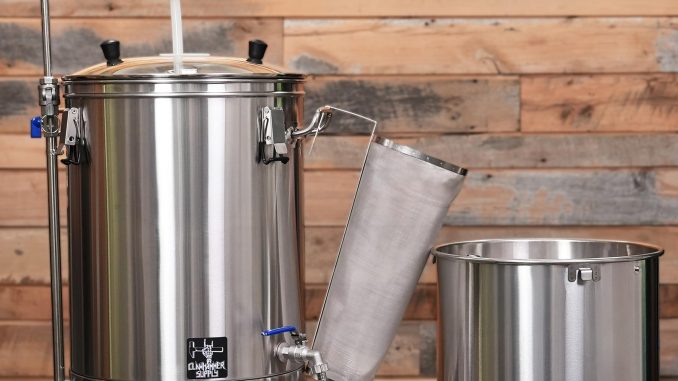
An all-in-one brewing system is an electric brewing appliance designed to handle several stages of the brewing process in one main vessel.
Most systems combine:
- An electric heating element
- A stainless steel brewing kettle
- A removable grain basket or malt pipe
- Temperature controls
- A drain valve
- A circulation pump on many models
- A digital controller on more advanced models
The basic process is straightforward.
You heat your brewing water in the vessel, add crushed malt to the grain basket, and maintain the required temperature during mashing. Once mashing is complete, you lift out the grain basket and proceed to boiling the wort in the same vessel.
After the boil, the wort must be cooled to a suitable temperature before yeast is added.
Some systems include additional accessories or chilling equipment, while others require you to purchase a separate wort chiller.
The main advantage is that you can perform most of the hot-side brewing process without juggling several separate kettles.
How Does an All-in-One System Work? 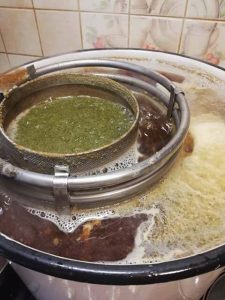
Although different models have different features, the brewing process usually follows the same sequence.
1. Heat the Brewing Water
Fill the vessel with the required amount of water and heat it to your target temperature.
The built-in controller monitors the temperature and switches the heating element on or off as needed.
This makes it easier to maintain a consistent mash temperature than with equipment that requires manual heating and monitoring.
2. Mash the Grain
Place the crushed malt inside the grain basket and lower it into the heated water.
During mashing, enzymes in the malt convert starches into sugars that yeast can later ferment.
Many systems allow you to set a target temperature and mash duration. More advanced controllers may also support step mashing, in which the temperature changes according to a programmed schedule.
3. Recirculate the Wort
On systems equipped with a pump, wort can be drawn from the lower part of the vessel and returned over the grain bed.
Recirculation helps distribute heat and can improve wort clarity. However, results depend on the grain crush, flow rate, grain-bed resistance and brewing technique.
Avoid running the pump too aggressively, as this can compact the grain bed and restrict flow.
4. Remove the Grain Basket
When mashing is complete, lift the grain basket and allow it to drain.
Some systems include a support frame that makes this easier.
Be careful: the basket and spent grain can be heavy, hot and awkward to handle. Check the manufacturer’s lifting instructions and never exceed the system’s recommended grain capacity.
5. Boil the Wort
With the grain removed, heat the wort to boiling temperature.
You can now add hops according to your recipe, including bittering additions early in the boil and aroma additions later.
After the boil, cool the wort using the system’s included equipment or a separate wort chiller.
The cooled wort is then transferred to a fermenter, where yeast converts the sugars into alcohol and carbon dioxide.
The Biggest Advantages of All-in-One Brewing Systems
1. Less Equipment to Manage
Traditional all-grain brewing can require separate vessels for heating water, mashing and boiling.
An all-in-one system combines much of this equipment into one compact unit.
This is especially useful if you brew in a garage, small workshop or another space where storage is limited.
You still need equipment for fermentation, cooling, cleaning and packaging, but the hot-side setup can be considerably simpler.
2. Better Temperature Control
Maintaining a consistent mash temperature is important because temperature influences enzyme activity and wort fermentability.
An electric controller makes it easier to reach and maintain your target temperature.
This does not guarantee identical results every time, but it removes some of the guesswork from the process.
For brewers who want to reproduce recipes more consistently, this can be a significant benefit.
3. Convenient Indoor Brewing
Because the system uses electricity rather than a gas burner, many models can be used indoors in a suitable, well-ventilated brewing area.
You don’t need to set up a separate burner or move several large vessels around during brew day.
However, indoor brewing still requires proper electrical safety, sufficient ventilation for steam, a stable heat-resistant surface and access to safe water drainage.
Before purchasing, check the manufacturer’s installation requirements and your local electrical regulations.
4. Programmable Brewing
Some systems allow you to program temperature steps, mash duration and other brewing parameters.
This is useful if you regularly brew recipes that require multiple mash rests or if you want a repeatable process.
You can focus more on your recipe and less on manually adjusting the heat.
Keep in mind that automation does not replace good brewing practices. Grain preparation, water chemistry, sanitation and fermentation management remain important.
5. A Convenient Upgrade for All-Grain Brewing
If you currently brew with malt extract, an all-in-one system can be a practical way to move into all-grain brewing.
You gain more control over the mash and the opportunity to experiment with different malts, mash temperatures and recipes.
However, you don’t need an expensive machine to make excellent beer. A well-managed extract setup or a simple brew-in-a-bag system can also produce excellent results.
The Disadvantages You Should Know About 
An all-in-one system is convenient, but it isn’t perfect.
1. Limited Batch Capacity
The advertised vessel volume is not the same as the amount of finished beer you can produce.
Grain takes up space, the boil causes evaporation, and some wort remains behind with hop material and sediment.
Always check the manufacturer’s recommended batch size, maximum grain bill and pre-boil volume.
If you regularly brew strong beers with large amounts of malt, you may need a larger system than someone brewing ordinary-strength ales.
2. Heating Can Take Time
Heating performance depends on the element’s power, the volume of liquid, the starting temperature and heat loss.
A system that works well for smaller batches may take considerably longer to heat a full vessel.
Before buying, check the power rating and electrical requirements of the exact model and regional version you intend to use.
Do not assume that two systems with similar capacities will heat at the same speed.
3. Pumps and Controllers Need Maintenance
A built-in pump can make recirculation easier, but it also adds another component that needs cleaning and maintenance.
Grain particles can obstruct the flow if the system is not operated correctly. Pumps, seals, valves and controllers may also require replacement over time.
Check whether spare parts are available and whether the manufacturer provides clear maintenance instructions.
4. Cleaning Still Takes Time
A single vessel does not mean that cleaning becomes effortless.
You still need to remove grain residue, clean the kettle, flush any circulation path and maintain the pump and valves according to the manufacturer’s instructions.
Cleaning promptly after brewing makes the job much easier.
5. You Are Buying Into One Design
A traditional multi-vessel system can be modified or expanded in many ways.
An all-in-one system is more integrated, which can make some upgrades less flexible.
Before purchasing, consider whether you will be able to obtain replacement parts, compatible accessories and technical support several years from now.
All-in-One vs. Traditional Three-Vessel Brewing
Which setup is better? It depends on your brewing style and priorities.
| Feature | All-in-one system | Three-vessel system |
|---|---|---|
| Space required | Usually compact | Usually more space |
| Temperature control | Often automated | Depends on equipment |
| Initial setup | Generally simpler | More components to configure |
| Customization | Depends on model | Usually very flexible |
| Cleaning | One main vessel, plus components | Several vessels and connections |
| Expansion | May be limited by design | Often easier to customize |
| Best suited for | Convenience and compact brewing | Brewers who enjoy flexibility and customization |
Neither option automatically produces better beer.
A skilled brewer can make excellent beer with either system. The difference is how much equipment, space, manual work and customization you want.
What Should You Look for Before Buying? 
If you’re considering an all-in-one brewing system, focus on these specifications rather than buying solely because a machine has the most features.
Batch Size
Think about how much finished beer you normally want from one brew day.
Choose a vessel that can comfortably handle your target volume, including grain displacement, evaporation and expected losses.
Heating Power and Electrical Compatibility
Check the exact voltage, wattage, plug type and circuit requirements.
Models sold in different regions can have different electrical specifications. Make sure the unit is compatible with your local supply and that the circuit can safely support it.
Recirculation Pump
A pump can improve convenience and help distribute wort during mashing.
If you choose a model without one, consider whether you are comfortable managing the mash without automatic recirculation.
Temperature Controller
A clear display and reliable temperature control are more useful than a long list of features you may never use.
If you brew step-mash recipes, programmable temperature stages may be worth paying extra for.
Cooling Equipment
Cooling the wort quickly and safely is an important part of the brewing process.
Check whether the system includes a chiller. If not, budget for a compatible immersion chiller or another suitable cooling solution.
Spare Parts and Support
Look for available replacement pumps, seals, valves, heating elements and other serviceable components.
Good after-sales support can be more valuable over the long term than a few extra features.
Who Should Buy an All-in-One Brewing System?
An all-in-one system may be a good choice if you:
- Brew all-grain beer regularly.
- Want a compact brewing setup.
- Prefer electric heating and digital temperature control.
- Want to reduce the number of separate vessels.
- Enjoy experimenting with mash schedules.
- Value convenience and repeatability.
You may want to keep your existing equipment if you only brew occasionally, are happy with your current process or prefer building and modifying your own system.
If you are new to brewing, consider starting with a simpler setup and learning the process before making a large investment.
Is an All-in-One Brewing System Worth the Money?
For many regular all-grain homebrewers, the answer is yes.
An all-in-one system can simplify brew day, improve temperature control and reduce the amount of equipment you need to manage.
But the best choice is not necessarily the most expensive machine or the one with the longest feature list.
The right system is the one that matches your batch size, brewing frequency, available space, electrical setup and budget.
Before you buy, compare the full cost of the system, including cooling equipment, cleaning supplies, accessories and any electrical work that may be required.
Most importantly, remember that equipment is only one part of making great beer.
Good ingredients, sound brewing technique, healthy yeast and careful fermentation still matter far more than having the most sophisticated machine in the room.
Choose the equipment that makes you want to brew more often — and helps you make the beer you love.
Happy brewing!
Leave a Reply
You must be logged in to post a comment.