
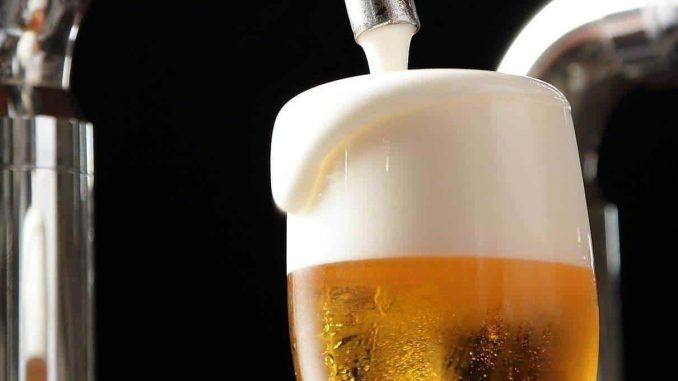
Have you ever watched a Japanese beer machine pour a glass of beer and wondered why the result looks so perfect?
The beer flows smoothly into the glass, the foam forms a neat layer, and the finished drink looks almost identical every time.
It might seem like a simple trick, but there is real science behind a perfect beer pour.
From the temperature of the beer to the shape of the glass, the pressure in the draft system and the way the beer enters the glass, several factors influence the final result.
And the best part? You don’t need an expensive Japanese beer machine to improve the way you pour beer at home.
Let’s explore what makes beer foam so special and how you can get a better pour with your own homebrew.
1. Why Does Beer Produce Foam? 
Beer foam forms when carbon dioxide escapes from the liquid and creates bubbles.
During fermentation, yeast produces carbon dioxide. Some of this gas dissolves into the beer, particularly when the beer is stored under pressure.
When beer is poured, the pressure changes and carbon dioxide begins to escape. Tiny bubbles form and rise to the surface, creating foam.
But not all foam is the same.
A good head of foam can improve the aroma, texture and overall drinking experience. It also helps release volatile compounds that contribute to the beer’s smell.
The proteins from malt, together with hop compounds and other substances in beer, help stabilize the bubbles.
This is why some beers produce a dense, lasting head while others lose their foam almost immediately.
What makes good beer foam?
Several factors matter:
- Protein content: Certain malt proteins help stabilize foam.
- Carbonation: Dissolved carbon dioxide supplies the gas for bubbles.
- Glass cleanliness: Grease and detergent residue can destroy foam.
- Temperature: Beer temperature influences carbonation and how the beer pours.
- Beer style: Different styles naturally produce different amounts and types of foam.
A beautiful head is not just decoration. It is part of the beer’s character.
2. The Japanese Approach to Pouring Beer
Japanese beer culture places considerable attention on presentation, consistency and serving technique.
Some commercial beer systems use specially designed dispensers to control the flow of beer and create a separate layer of foam. Depending on the machine, the foam may be produced using a dedicated dispensing mechanism rather than simply allowing the beer to foam naturally as it enters the glass.
The objective is to produce a repeatable result: a glass of beer with a controlled amount of liquid and a neat, creamy-looking head.
This approach is particularly interesting because it separates two things that are often treated as one process: dispensing the beer and creating the foam.
However, there is no single Japanese pouring method used everywhere. Different bars, machines and beer brands use different techniques.
The underlying principle remains the same: control the pour to achieve the desired balance between beer and foam.
3. Should You Tilt the Glass When Pouring Beer? 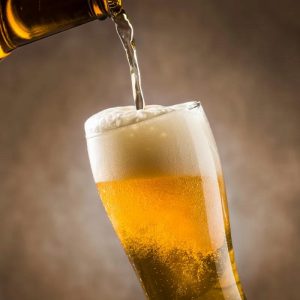
For many beers, starting with a tilted glass is a useful way to reduce excessive foaming.
Hold the glass at approximately a 45-degree angle and pour the beer gently down the inside wall.
As the glass fills, gradually bring it upright.
If you want a more pronounced head, allow the beer to fall a shorter distance into the bottom of the glass near the end of the pour. This creates more turbulence and releases additional carbon dioxide.
The exact technique depends on the beer style and the result you want.
For example, a highly carbonated wheat beer may foam much more readily than a less carbonated beer served from a well-balanced draft system.
A simple pouring technique
- Start with a clean glass.
- Tilt it at approximately 45 degrees.
- Pour steadily down the inside wall.
- Gradually straighten the glass as it fills.
- Adjust the final part of the pour to create the desired head.
Avoid pouring extremely slowly for the entire process. Depending on the beer and dispensing system, an excessively slow pour can produce a different result from a steady, controlled flow.
The goal is not to eliminate foam. It is to create the right amount.
4. How Much Foam Should a Beer Have?
There is no universal rule that every beer must have exactly the same head.
A common serving target for many lagers is a head of roughly one to two fingers, although glass size, beer style and local serving traditions all influence what is considered ideal.
Some beers are traditionally served with a much larger head. Others are enjoyed with a smaller one.
Foam also changes the way a beer smells and feels.
As bubbles rise and burst, they release aromatic compounds into the air. A stable head can help retain some of these aromas near the surface of the beer.
The foam also provides a visual indication of how the beer is behaving, but it is not a reliable measure of quality on its own.
A beer with little foam is not necessarily bad, and a beer with a large head is not automatically excellent.
The important thing is that the carbonation, serving method and beer style work together.
5. Why Beer Temperature Matters
Temperature is one of the most important factors in pouring beer consistently.
Carbon dioxide is generally more soluble in colder beer than in warmer beer. When beer becomes warmer, dissolved carbon dioxide escapes more readily, which can contribute to excessive foaming during pouring.
This is why a warm keg or bottle can be more difficult to pour neatly.
However, serving every beer as cold as possible is not the answer.
Very cold temperatures can suppress aroma and flavor, especially in beers with complex malt or hop character.
Different beer styles benefit from different serving temperatures.
For homebrewers, the practical lesson is simple: keep your beer at a consistent, appropriate temperature and avoid letting bottles or kegs warm up unexpectedly before serving.
If your beer suddenly starts producing much more foam than usual, temperature is one of the first things worth checking.
6. The Secret Is Also in the Glass
You can have excellent beer and a well-adjusted dispensing system, yet still struggle to create stable foam if the glass is dirty.
Even small amounts of oil, grease or detergent residue can interfere with bubble formation and stability.
A glass that looks clean may still contain invisible residue from food, lipstick or dishwasher products.
For the best results:
- Use a glass reserved for beer whenever possible.
- Rinse it thoroughly after washing.
- Avoid touching the inside of the glass.
- Check that water runs evenly over the surface rather than breaking into isolated patches.
- Avoid glasses with oily or detergent residue.
A properly cleaned glass can make a noticeable difference to the way beer foams and holds its head.
For homebrewers who take pride in their finished beer, glassware deserves more attention than it often receives.
7. Can You Get Japanese-Style Beer Foam at Home?
Absolutely. You may not be able to reproduce the exact result of a specialized commercial machine, but you can improve the appearance and consistency of your beer with a few simple steps.
Start with the right temperature
Keep your beer at a stable serving temperature appropriate for its style.
Check your carbonation
If your beer is undercarbonated, it may struggle to develop a lasting head. If it is excessively carbonated, pouring can become difficult.
For bottle-conditioned beer, allow sufficient time for carbonation to develop and confirm that the beer has finished fermenting before bottling.
Use clean glassware
This is one of the easiest improvements you can make, and it costs almost nothing.
Practice your pouring technique
Try pouring the same beer using two methods: first down the side of a tilted glass, then with a more upright glass to create additional foam.
Observe how the head, aroma and texture change.
Keep notes
If you brew your own beer, record the carbonation level, serving temperature and pouring method.
You may discover that a small adjustment produces a noticeably better result.
8. What Homebrewers Can Learn from Professional Beer Systems
The most useful lesson from automated beer dispensers is not that every homebrewer needs a sophisticated machine.
It is that consistency matters.
Professional systems are designed to control variables such as temperature, pressure and flow rate. When those variables are stable, the beer is easier to dispense predictably.
Homebrewers can apply the same principle without buying expensive equipment.
Keep your beer cold enough for the intended serving style, maintain clean lines and glassware, and use appropriate carbonation levels.
If you serve beer from a keg, make sure the dispensing pressure and line setup are suitable for the beer’s carbonation. An imbalance between pressure, temperature and line resistance can contribute to excessive foaming or a poor pour.
For bottle-conditioned beer, handle bottles gently if sediment is present and pour carefully to avoid disturbing it.
These small details can make the difference between a frustrating pour and a great-looking glass of homebrew.
Final Thoughts: A Better Pour Makes Better Beer More Enjoyable
A perfect beer pour is a combination of science, technique and attention to detail.
Carbonation creates the bubbles. Beer proteins help stabilize the foam. Temperature affects how readily carbon dioxide escapes. Clean glassware helps the head survive, while a controlled pouring technique determines how much foam develops.
Japanese beer machines demonstrate how these variables can be managed to produce consistent results.
But you don’t need an automated dispenser to benefit from the same principles.
Start with clean glassware, consistent temperature and suitable carbonation. Practice your pouring technique and pay attention to how different beers behave.
Your homebrew deserves to be served just as carefully as it was brewed.
Leave a Reply
You must be logged in to post a comment.