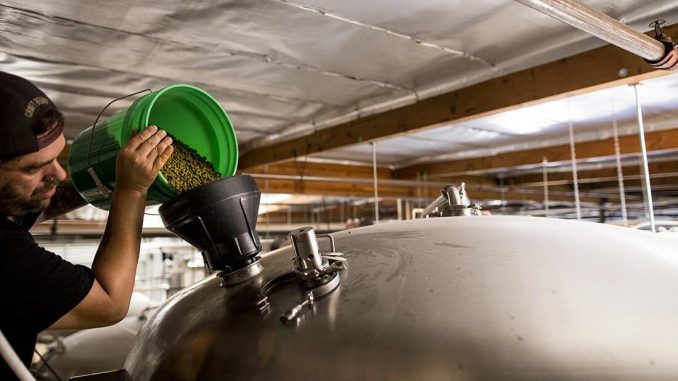
Dry hopping is one of the easiest ways to give your homebrewed beer an intense hop aroma without adding significant bitterness. It is especially popular in styles such as American IPA, New England IPA, pale ale, and many modern craft beers.
But adding more hops does not always mean getting a better result. Timing, hop variety, dosage, oxygen exposure, and contact time can all influence the final beer.
In this guide, you will learn how dry hopping works, when to add hops, how much to use, and how to avoid common mistakes.
What Is Dry Hopping?
Dry hopping means adding hops to beer after the wort has been boiled. The technique is commonly used during fermentation or after fermentation has finished.
Unlike traditional kettle hopping, dry hopping focuses primarily on aroma rather than bitterness.
Hops contain aromatic compounds that can contribute notes of:
- Citrus, such as lemon, grapefruit, and orange
- Tropical fruit, including mango, pineapple, and passion fruit
- Floral and herbal aromas
- Pine, resin, and fresh green notes
- Stone fruit, such as peach and apricot
The exact aroma depends on the hop variety, its condition, the amount used, and how it is added.
Because dry hopping takes place after the boil, many of the volatile aromatic compounds are retained rather than being driven off by prolonged heating.
When Should You Add Dry Hops?
There are three common approaches to dry hopping. Each has advantages, and the best choice depends on the beer style and the result you want.
1. During Active Fermentation
Adding hops while fermentation is still active is sometimes called active-fermentation dry hopping.
The yeast may help transform certain hop-derived compounds, potentially creating additional fruity aromas. Active fermentation can also consume some oxygen introduced with the hops, although it does not make oxygen exposure harmless.
This approach is worth experimenting with when brewing hop-forward beers.
Best for: Brewers who want to explore different aroma profiles and techniques.
2. Near the End of Fermentation
Many homebrewers add dry hops when fermentation is nearly complete.
This timing can help preserve fresh hop character while reducing the amount of vigorous fermentation that remains. It also gives the brewer an opportunity to manage the contact time before packaging.
However, fermentation must be monitored carefully. Adding hops does not mean the beer is ready to bottle.
Best for: Pale ales, IPAs, and other beers where hop aroma is a major feature.
3. After Fermentation Is Complete
Adding hops after fermentation has finished can produce a pronounced fresh-hop aroma. However, introducing hops at this stage requires particular care because oxygen can damage the beer’s flavour and aroma.
Use clean, sanitised equipment and minimise splashing, unnecessary transfers, and exposure to air.
Best for: Brewers who can add hops with good oxygen control and want to experiment with a fresh, expressive hop profile.
There is no single perfect timing for every beer. Try one method at a time and keep notes so you can compare results.
How Much Hops Should You Use?
The right dry-hop amount depends on the beer style, the hop variety, and your personal preference.
For a typical five-gallon (19-litre) batch, the following ranges are useful starting points rather than strict rules.
| Desired result | Approximate dry-hop rate | Amount for 19 litres |
|---|---|---|
| Subtle hop aroma | 1–3 g/L | 19–57 g |
| Noticeable hop aroma | 3–6 g/L | 57–114 g |
| Intense hop aroma | 6–10 g/L | 114–190 g |
These amounts are not universal. Some beers work well with lower rates, while heavily hopped modern IPAs may use more. Higher hop rates can also increase beer losses because hops absorb liquid and create additional sediment.
If this is your first dry-hopped batch, start with a moderate amount. You can increase the rate in your next brew after tasting the result.
Which Hops Are Best for Dry Hopping?
Different hop varieties can produce very different aromas. Here are a few popular choices for experimentation.
Citra
Citra is known for pronounced citrus and tropical-fruit character. It is a popular option for American IPAs and modern pale ales.
Mosaic
Mosaic can contribute berry, tropical-fruit, citrus, and other complex aromas. Its character can vary depending on the crop and how it is used.
Simcoe
Simcoe is often associated with pine, citrus, and earthy or resinous notes. It can add complexity to hop-forward beers.
Amarillo
Amarillo is valued for its orange-like citrus and floral character. It can work well in pale ales and IPA blends.
Cascade
Cascade is a classic American hop with grapefruit, floral, and citrus characteristics. It is a good starting point for traditional American pale ale.
You do not need to combine several varieties in every recipe. Using a single hop can help you understand its individual character before experimenting with blends.
Whole-Cone Hops or Hop Pellets?
Homebrewers generally use either whole-cone hops or compressed hop pellets.
Hop pellets are convenient, widely available, and easy to measure. They break apart when added to beer, releasing their aromatic compounds efficiently. However, they can create fine particles and additional sediment.
Whole-cone hops retain their natural cone shape and can be easier to remove in some setups. They usually take up more space and may absorb more beer.
For most beginners, hop pellets are a practical starting point. Whatever form you choose, make sure the hops are fresh, properly stored, and suitable for brewing.
How Long Should Dry Hops Stay in the Beer?
A contact time of approximately two to five days is a reasonable starting point for many homebrewing experiments.
Longer contact does not automatically produce a better aroma. Depending on the hop variety, temperature, dosage, and beer composition, extended contact can sometimes introduce unwanted grassy, vegetal, or harsh flavours.
There is no universal cutoff, so taste and consistency matter more than following a fixed number of days.
For your first experiment, choose a consistent contact time, record it, and compare the result with a later batch made using a different duration.
Avoid opening the fermenter repeatedly just to smell or inspect the beer. Each opening creates another opportunity for oxygen or contamination to enter.
The Biggest Dry Hopping Mistakes
1. Introducing Oxygen
Oxygen exposure after fermentation can lead to stale flavours and loss of fresh hop character. Some hop-forward beers can develop dull or unpleasant flavours surprisingly quickly when oxygen is introduced.
Prepare your equipment in advance, use clean and sanitised tools, and avoid splashing during additions and transfers.
2. Using Old or Poorly Stored Hops
Hops lose aroma as they age, especially when exposed to oxygen, warmth, and light.
Buy hops from a reliable supplier and follow the storage instructions. Refrigeration or freezing in well-sealed packaging can help preserve quality, depending on the product and packaging.
3. Assuming More Hops Always Means Better Beer
A high hop dosage can create a powerful aroma, but it can also increase beer losses and produce a less balanced result.
Start with a moderate rate and adjust it based on tasting notes rather than simply adding more.
4. Bottling Before Fermentation Is Complete
Dry hopping is not a reliable indicator that fermentation has finished.
In some circumstances, adding hops can cause additional fermentable sugars to become available through hop-related enzyme activity, a process commonly known as hop creep. This can lead to renewed fermentation, changes in gravity, and excessive carbonation in packaged beer.
Always confirm that gravity is stable and that the beer is ready for packaging. Follow safe bottling practices and never rely on elapsed time alone.
5. Ignoring Temperature
Dry-hop aroma extraction and flavour development can vary with temperature. Warmer conditions may speed extraction, but they can also change the aroma profile and increase the risk of unwanted character.
For your first batch, follow a consistent process appropriate for your beer and yeast. Change only one variable at a time when experimenting.
Does Dry Hopping Increase Bitterness?
Dry hopping generally contributes much less bitterness than adding hops during the boil, but it is not completely neutral.
Hop compounds can interact with beer and contribute bitterness, astringency, or a perceived drying sensation. The result depends on the hop variety, dosage, beer composition, and process.
Remember that an IBU value is not a complete description of how bitter a beer will taste. Malt sweetness, alcohol, carbonation, and hop-derived compounds also influence the overall impression.
If you are developing an IPA recipe, use the IBU calculator on our Homebrewing Calculators page to estimate bitterness from your kettle hop additions. Treat that figure as an estimate rather than a precise prediction of the bitterness of the finished beer.
A Simple Dry Hopping Experiment
Want to learn how dry hopping affects your own beer? Try a controlled experiment.
- Brew a pale ale or IPA using a recipe you already understand.
- Record the hop variety, batch volume, original gravity, and fermentation details.
- Choose a moderate dry-hop rate, such as 4 g/L.
- Add the hops at a clearly recorded stage of fermentation.
- Keep contact time consistent and minimise oxygen exposure.
- Before packaging, confirm that fermentation is complete and the beer is safe to package.
- Taste the finished beer and record the aroma, flavour, bitterness, and overall balance.
For an even more useful comparison, divide a suitable finished beer into small, sanitised samples and test different dry-hop rates using a carefully controlled method. Keep the base beer, hop variety, contact time, and tasting conditions as similar as possible.
Small experiments can teach you more than changing several recipe variables at once.
Final Thoughts
Dry hopping is a powerful technique for creating aromatic, modern homebrew. It does not require an elaborate brewing setup, but it does reward careful measurement, good sanitation, oxygen control, and patience.
Start with fresh hops, a moderate dosage, and a simple process. Record what you do, taste the results, and adjust one variable at a time.
Your best dry-hopped beer may not come from using the most hops. It may come from finding the right variety, timing, and amount for the beer you want to brew.
What is your favourite hop for dry hopping? Do you prefer citrus-forward Citra, complex Mosaic, classic Cascade, or something else? Share your experience in the comments!
Note: the article is written for educational purposes; actual dry hopping results vary by recipe and process. Pay particular attention to stable fermentation and bottling safety.
Leave a Reply
You must be logged in to post a comment.