Homebrewing is all about creativity, curiosity, and occasionally wondering why you thought brewing 20 liters of beer in your kitchen was a good idea.
But once you have mastered the basics, brewing the same recipes over and over can become a little predictable.
That is where experiments come in.
You do not need expensive equipment, rare ingredients, or a professional brewing setup to make your next batch interesting. Sometimes, the most memorable brewing experiences come from changing just one ingredient, testing a new technique, or challenging yourself to try something completely different.
We have put together a homebrewer’s bucket list featuring 12 experiments worth trying at least once.
How many have you already completed?
1. Brew the Same Recipe with Two Different Yeasts
This is one of the most interesting ways to discover how much yeast influences beer.
Take a recipe you know well and split the wort into two fermenters. Use a different yeast strain in each one.
Keep the other conditions as similar as possible.
Once fermentation is complete, compare the aroma, flavor, attenuation, and overall character.
You might be surprised by how different two beers made from the same wort can taste.
The challenge: Can you identify which yeast produced which beer in a blind tasting?
2. Try a Blind Tasting with Your Friends
Think you can recognize your own beer?
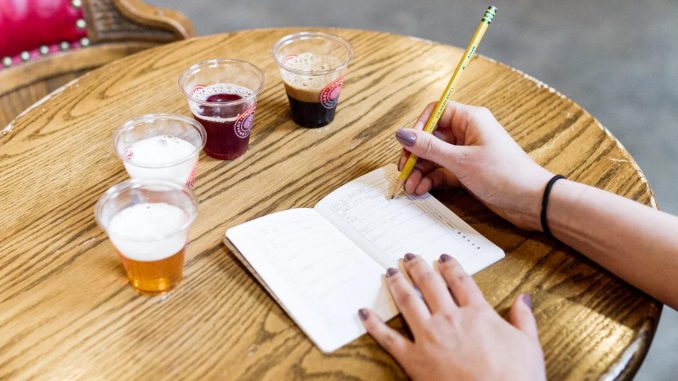
Invite a few friends, pour several beers into identical glasses, and hide the labels.
Include your own homebrew alongside commercial examples or beers from other homebrewers.
Ask everyone to describe the aroma, flavor, bitterness, body, and overall impression before revealing the beers.
It is a fun way to discover how much perception changes when you do not know what is in the glass.
The challenge: Can your friends recognize your homebrew without seeing the bottle?
3. Brew a Beer Using Only One Hop Variety
Many recipes combine several hop varieties to create complex aromas and flavors.
For this experiment, keep things simple.
Choose one hop variety and use it throughout the recipe. You can explore its contribution through bittering, late additions, and dry hopping.
The result will help you understand the character of that particular hop.
The challenge: Find a hop variety you enjoy enough to make it the star of an entire recipe.
4. Make Two Beers with Different Mash Temperatures
Mash temperature can influence the fermentability of wort and the final body of your beer.
Try brewing the same recipe twice, changing only the mash temperature.
Keep your ingredients, yeast, fermentation conditions, and other variables as consistent as possible.
Compare the finished beers.
One may feel lighter and drier, while the other may have a fuller body.
The challenge: Which version do you prefer, and can you explain why?
5. Brew a Beer Inspired by Your Favorite Dessert
Chocolate, coffee, vanilla, caramel, fruit, and spices can all inspire creative beer recipes.
Choose a dessert you love and think about how its main flavors could work in a beer.
A chocolate stout? A vanilla porter? A fruit-inspired wheat beer?
Start with a simple recipe and introduce additional ingredients carefully. Consider their intensity, timing, and possible effects on fermentation.
The challenge: Create a beer that reminds people of your favorite dessert without becoming overly sweet or unbalanced.
6. Try a New Beer Style
Every homebrewer has a comfort zone.
Maybe you always brew pale ales, stouts, or wheat beers.
This time, choose a style you have never attempted before.
Research its typical ingredients, fermentation characteristics, bitterness, color, and flavor profile. Then build a recipe that aims to represent the style.
The challenge: Brew something completely outside your usual brewing routine.
7. Compare Different Water Profiles
Water chemistry can have a significant influence on the final character of beer.
For an educational experiment, prepare two versions of a recipe using different, carefully calculated water profiles.
Keep the grain bill, hops, yeast, and brewing process consistent.
Compare the finished beers and pay attention to how the overall balance and flavor perception change.
Use suitable brewing water and reliable measurements rather than making random mineral additions.
The challenge: Can you identify which water profile works better with your chosen beer style?
8. Brew a Small Experimental Batch
Not every experiment needs a full-size batch.
Try brewing a smaller quantity specifically for testing a new ingredient, technique, or recipe idea.
Small batches are particularly useful when experimenting with unfamiliar ingredients or unusual combinations.
They also make it easier to compare several variations without filling every fermenter you own.
The challenge: Create a small batch that teaches you something useful for your next full-size brew.
9. Explore the Difference Between Fresh and Aged Beer
Some beers are best enjoyed relatively fresh, while others can develop interesting characteristics over time.
Take a suitable beer and set aside a few properly sealed bottles.
Taste one at an earlier stage and compare it with another after a period of storage.
Keep notes about aroma, flavor, carbonation, and overall balance.
Remember that not every beer improves with age. Storage conditions and the beer style matter.
The challenge: Discover how your chosen beer changes over time.
10. Create Your Own Signature Recipe
Every homebrewer eventually wants to create something that feels uniquely theirs.
Instead of starting with someone else’s recipe, begin with an idea.
Think about the beer you would love to drink. Choose a style, ingredients, and flavor direction, then build a recipe around that concept.
Your first attempt might not be perfect.
That is part of the process.
Record your measurements, fermentation details, and tasting notes so you can improve the recipe next time.
The challenge: Develop a recipe you would proudly serve to other homebrewers.
11. Keep a Detailed Brewing Journal for One Entire Batch
This experiment does not require unusual ingredients or special equipment.
It simply requires consistency.
Record everything during one complete brewing cycle:
- Original gravity and final gravity
- Mash temperature and duration
- Fermentation temperature
- Yeast strain and pitching details
- Hop additions
- Fermentation observations
- Packaging date
- Tasting notes
Once the beer is finished, review your notes.
You may discover that small details you previously ignored are actually important to your brewing results.
The challenge: Complete one batch with a detailed record from brew day to the first glass.
12. Brew Something You Would Never Normally Choose
This might be the most entertaining challenge on the list.
Ask a friend to choose a beer style, ingredient, or flavor direction for your next experimental batch.
You can set a few reasonable limits, but let someone else take you outside your comfort zone.
Perhaps you will discover a new favorite.
Or perhaps you will create a beer that becomes a legendary story among your friends.
Both outcomes are part of homebrewing.
The challenge: Let someone else inspire your next recipe.
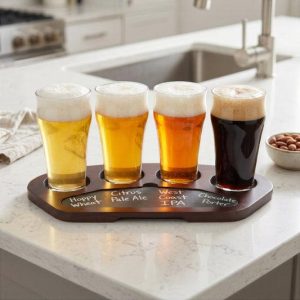
Turn Your Next Brew Day into an Experiment
The best thing about homebrewing is that there is always something new to learn.
You can experiment with yeast, hops, grains, water, fermentation, recipes, or even the way you taste and evaluate beer.
Not every experiment will produce a fantastic beer. Some will surprise you, some will disappoint you, and a few might become recipes you brew for years.
That is exactly what makes the hobby so enjoyable.
You do not have to complete all 12 challenges. Pick one, plan it carefully, take notes, and see what happens.
And remember: even a failed experiment can teach you something valuable.
Your Turn!
How many of these 12 experiments have you already tried?
And what is the most unusual or interesting thing you have ever done while homebrewing?
Share your experience in the comments. Your next experiment might inspire another homebrewer!
Happy brewing! 🍻
Leave a Reply
You must be logged in to post a comment.